
Cable Television started as a service for rural and suburban areas that were too far away to receive the broadcast signal.
The Big Three television networks were happy to extend their broadcast signals to their distant viewers. More viewers equaled higher ratings, and they could charge higher rates for their commercials.
The Rise of Cable Television and the Beginning of the Great Buffet
In the late seventies, Cable T.V. began adding basic and premium cable programming to their channel lineup and started competing with the Broadcast Network’s programs for ratings.
- 1972—Cable T.V. regulations lifted, allowing networks to carry more channels.
- 1980s- Deregulation and introducing satellites fueled further growth.
- 1996- The Telecommunications Act led to more consolidation and allowed cross-ownership between cable companies and Broadcasters.
- 2000s- Major mergers and acquisitions continued.
- 2016- The Comcast and Time Warner Cable merger captured a significant market share.
The Cable Giants are growing larger
As Cable Television’s popularity grew, with better reception of the broadcast signal and adding basic and premium cable channels, national cable conglomerates swallowed up small regional cable companies.
The aggressive mergers and acquisitions allowed these companies to increase their market share, create economies of scale, control content, and diversify their services. These Cable monopolies controlled the content distribution in their systems. Without competition, the price increase continued to outpace the inflation rate. The Cable monoliths determined how much you paid to feed from the Great Buffet.
Growing up in my hometown the municipal authorities were lobbied by the local broadcast stations to resist approving a franchise to the cable companies. So, my exposure to cable T.V. came late for me, but it didn’t prevent me from creating my own Cable Channel.
HANGER AE
Cape Canaveral Air Force Station, FL
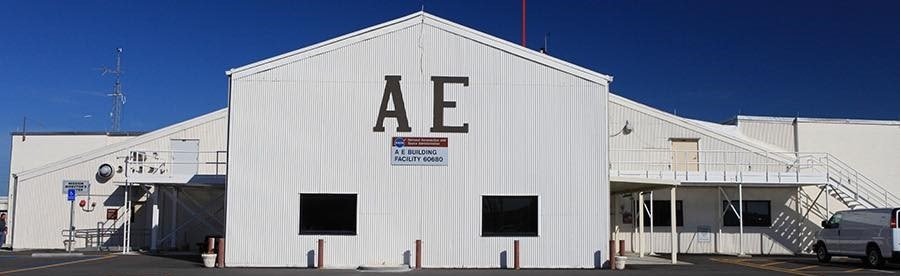
Hanger AE 2016
As a member of the communications team supporting the NASA Mission Director’s Center, I handled the audio, video and telemetry data acquisition for critical launch operations.
After the Shuttle Challenger disaster, NASA returned its focus to the expendable rocket systems that carry government and commercial satellites into orbit.
The Mission Director’s Center and Telemetry Lab at Hanger AE supported the initial thirty-two GPS satellites, the GOES weather, the Hubble Space Telescope, and long-ranging planetary probes.
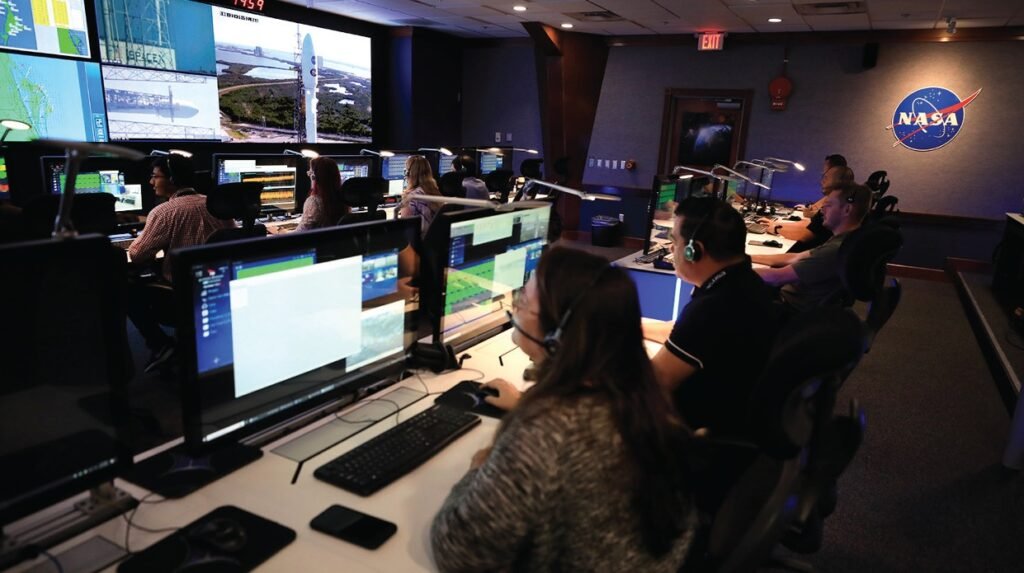
MDC Launch Operations-2016
This is much nicer than my time at AE, we were required to strip the text label off each communication button on all the command consoles so we could change it between launches from the Delta, Atlas, Titan or Shuttle launch pads. It was hours of dull work…
Our communications center delivered critical, live telemetry data, which tracked the rocket’s progress to Mission Control and Engineering support teams.
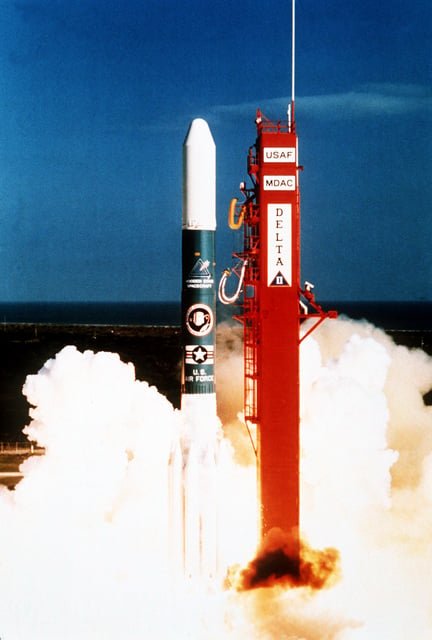
DELTA Launches
We were very busy supporting the Delta Spacecraft launches deploying the Global Positioning System (GPS).
Where would our smartphones be without it?
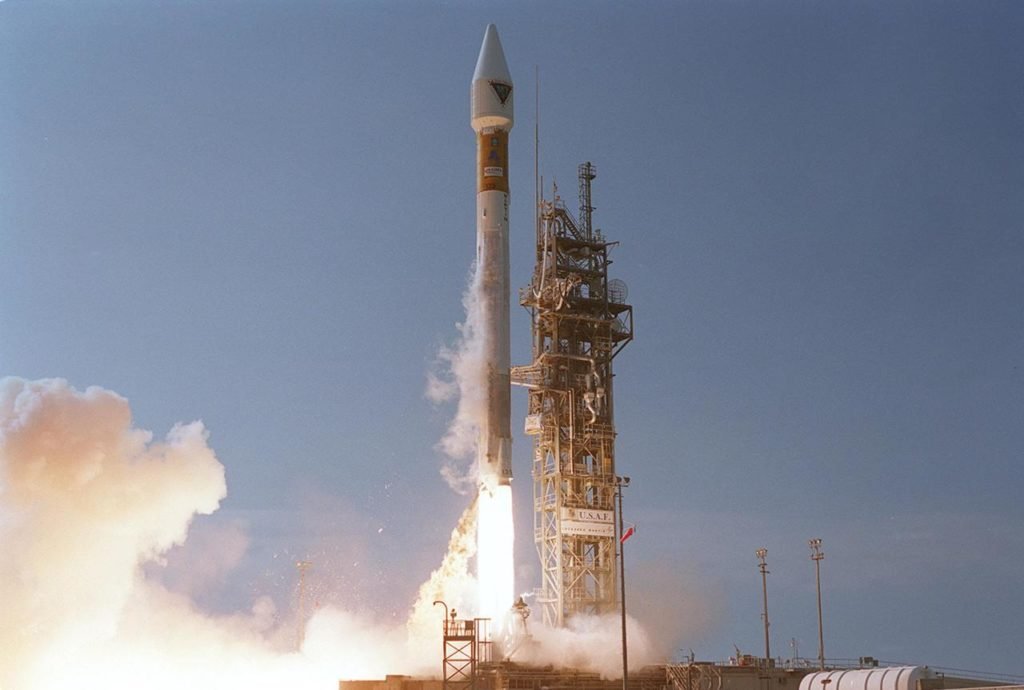
Atlas-Centaur Launches
The Atlas was another workhorse supporting NASA/DOD and Commercial payloads.
TITAN Launches
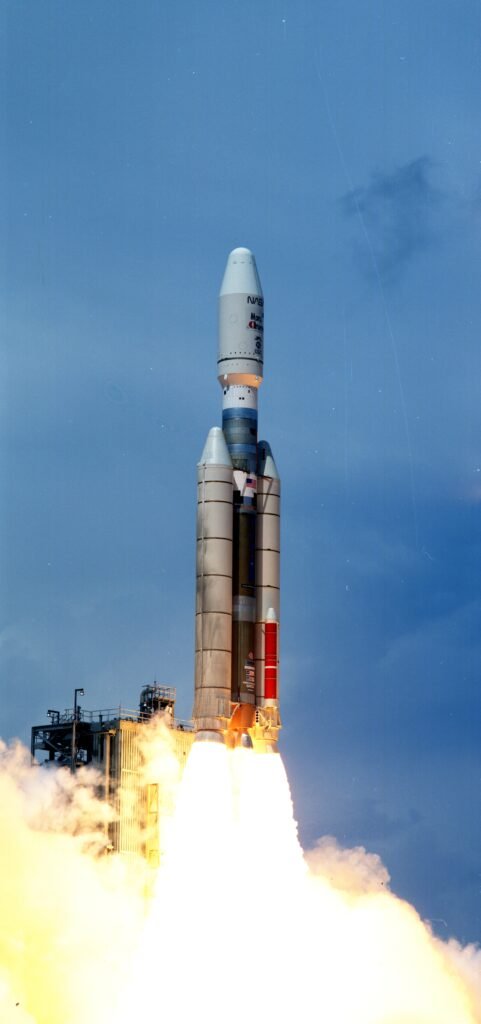
We supported the first commercial launch of the Titan IV..
The ill-fated Mars Observer Planetary Probe which failed to communicate after it was deployed…
Shuttle Launches
STS-103 -Discovery the launch of the Hubble Space Telescope was one of the missions we supported.
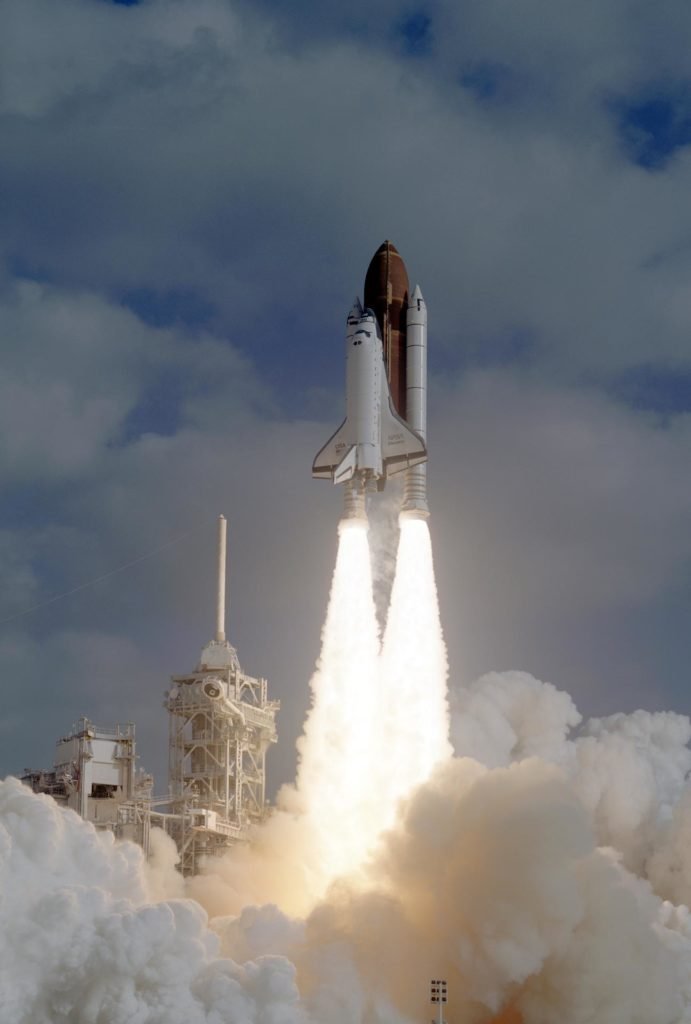
The AETV Video Acquisition System captured dozens of launch pad and long-range tracking cameras throughout the mission and archived the footage on VHS tape. These video recordings were precious for reviewing mission failures and scrub analysis.
HANGER AE Cable T.V.
The Communication team’s operations included several adjacent hangers, Hanger AM and Hanger AO, which contained clean rooms for satellite payload processing.
Our communication services between these buildings included a small cable television distribution system. We modulated the local broadcast stations collected from antennas on both sides of the hangar and included them as part of our support package.
We also used AETV for live mission coverage, playback and everyday communications with graphic pages from the Video Toaster.
NASA UNIVERSITY
NASA University was born when a new batch of Air Force Range Officers for the 45th Air Squadron approached NASA to use the Mission Directors Center for training.
Our AETV system supported training of the new Air Force officers assigned as Launch Controllers for the range. They cleared the way for the vehicle’s flight path over the Florida coastline and out to sea.
We played archived launch video through our video distribution switch and patched the relevant audio to the various mission control channels to provide simulated launch exercises into the Mission Directors Center.
These simulations included mission incidents and failures and graded the controller’s responses.
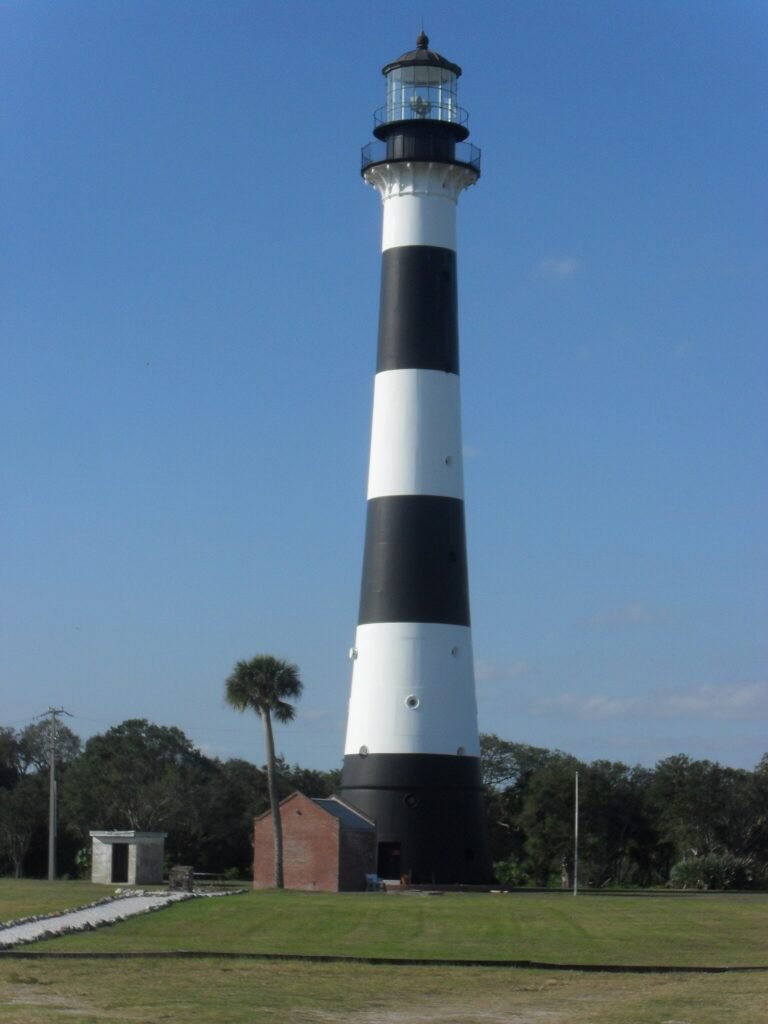
On graduation day, we always played an old black and white Air Force film produced in the 1960s, which launched the Cape Canaveral Lighthouse into orbit.
A BILLION-DOLLAR DAY
Launch missions are long hours of waiting, and if our communications team is on their game, it could be very dull.
Sometimes, twelve to fourteen hours of filling tanks, testing, venting, stopping, and starting the countdown to analyze abnormalities.
Then, an exhilarating ten-second countdown and a spectacular explosion of light as the vehicle lifts from the pad and climbs out of sight a few short minutes later.
During one commercial launch, in a lull of the countdown, after I played back a series of launch music montages, the NASA Mission Control Engineer led the customer for that day’s mission to my dark corner of the comm room to introduce me.
“I hear you’re the guy who makes music videos?” the customer asked.
“Yes, sir,” I replied as I rose to shake his hand.
“Will you make one for me?”
“Sure!”
“Well, if it’s successful…” He smiled. “I won’t need it if it’s not.”
“Probably not.”
The next few hours of the hold, he sat with me and talked of the years-long effort of him and his company, which had led to that evening.
During our conversation, my excitement grew, and I grasped the impending disruptive wave caused by this launch.
When the hold cleared, the countdown began again.
“Thank you for your time,” the customer said. “I look forward to your video. But if it blows up on the pad… I’m out a billion dollars.”
He smiled, shook my hand, and returned to his seat in the Mission Director’s Center.
The ten-second count, ignition, and lift off! The Atlas IIA rose from the launch pad in a brilliant ball of fire. I rushed out the side door to witness the rocket and its payload rising into the night sky. The mission was a success!
It was the second satellite in the DirecTV digital cable television system.
When it took its place in orbit thousands of miles from Earth, the Realm had its ‘New Restaurant,’ Cable T.V. had its first competition, and the Digital Revolution was about to get interesting.
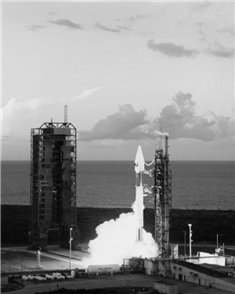
I didn’t know it then, but I would soon be riding this wave of disruption for quite some time.
“This post may contain affiliate links. If you click one of them, we may receive a cute commission at no extra cost to you. Thank you.”
Learn More
Become a guild member and join the curation revolution.
Next week: We will explore-
The MPEG4 Disruption– In which we Build a U-verse!
TODAY’S QUESTION:
What are some of your challenges with your Cable T.V. experience?
Please share in the comments.

This article contains excerpts from
The Cord Curator’s Guide to the Galaxy-
Volume One- The Restaurant at the End of the Cord.
Leave a Reply