
In 1946, only 6,000 television sets were in operation, mostly in greater New York City, where there were already three broadcast stations; by 1949, the number had increased to 3 million sets, and by 1951, it had risen to 12 million
In 1951 there were 64 American cities with television stations, though most had only one.
EARLY DAYS
In the early days of television broadcasting, the National Broadcast Company (NBC) and the Columbia Broadcast System (CBS) dominated the airwaves.
In the 1960s, the American Broadcast Company (ABC) reached a national audience creating the Big Three.
Through the sixties and seventies, the three major broadcasters provided a moderate addition to our daily diet and served a steady diet of meat and potatoes, comfort food, for the least common denominator of viewers.



ATSC, MPEG-2 and HDTV
The Start of the Digital Age of Television
The Advanced Television Systems Committee (ATSC) established the standard for digital television transmission in the 1990s and Digital soon replaced most of the old NTSC Analog stations.

The ATSC Digital standard and MPEG2 compression allowed the Broadcasters to offer multiple programming channels within the same 6 MHz bandwidth of their NTSC analog signal.
Digital Broadcast System– compression allowed for second and third channels.
- Channel 2 became 2.1, 2.2, and 2.3 channels.
- HDTV- High-Definition Television
720P- CBS/ ABC
1080i- NBC/Fox
1080P- Blue-ray HD-DVD
You can now own your favorite movies on High-Definition digital video with Dolby surround sound.
8VSB and the Digital Haystack
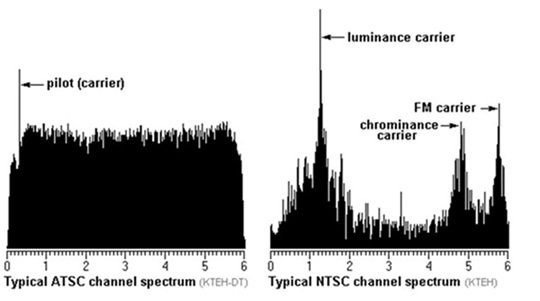
The broadcaster digitized the analog audio and video content and placed them in a Transport Stream. They enclosed Multiple HD and SD Transport streams in the 8VSB signal at the transmitter.
Customers with a T.V. that had an ATSC tuner could receive the new HD and SD channels over the air.
This launched another shiny new pipe into the sky, and the Great Buffet grew a little more.
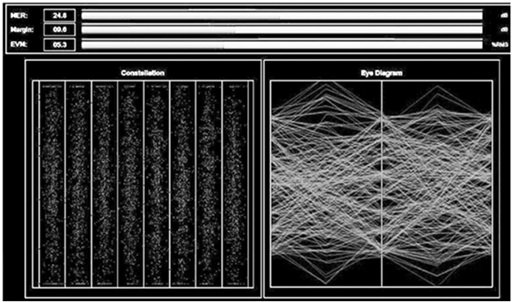
Representation of the eight vestigial sidebands as a constellation and Eye Diagram
MPEG2 compression technology also assisted the Cable and Satellite providers in sending even more digitized programs down their pipes and added more content for the buffet.
What can I get for Free?
A valuable tool for understanding the free-flowing content you may receive at your home is Titan T.V.

What channels will I be able to receive?
Several online tools are available to help identify what channels we can expect to receive at our location and assist with choosing what type of antenna and the best place to mount it.
Antennaweb.org
This is an excellent resource for identifying local broadcasters and helping you choose the best antenna for your location.
T.V.Fool.com
This was the most user-friendly site to find local broadcasters, the best antenna, and where to mount it.
How to find your local broadcasters
On the T.V. Fool website–
- Click on Check Your Address for Free T.V.
- Select >>Click Here<<
- T.V. Signal Locator: Fill in the form fields with your address and select “Find Local Channels“
(Note: The website also allows you to explore different heights for the Antenna to see how it will affect your ability to receive the channels. The farther you are from the transmitter towers, the higher your antenna installation will need to be.)
The Broadcast T.V. Signal locator will analyze your location and report the strength of the signal you can expect to receive.
Antenna Location
The Antenna Web and T.V. Fool web tools can give you an idea of what type of antenna you need and how high you need to mount it for the best reception.
The distance from the transmit location determines the antenna type and height.
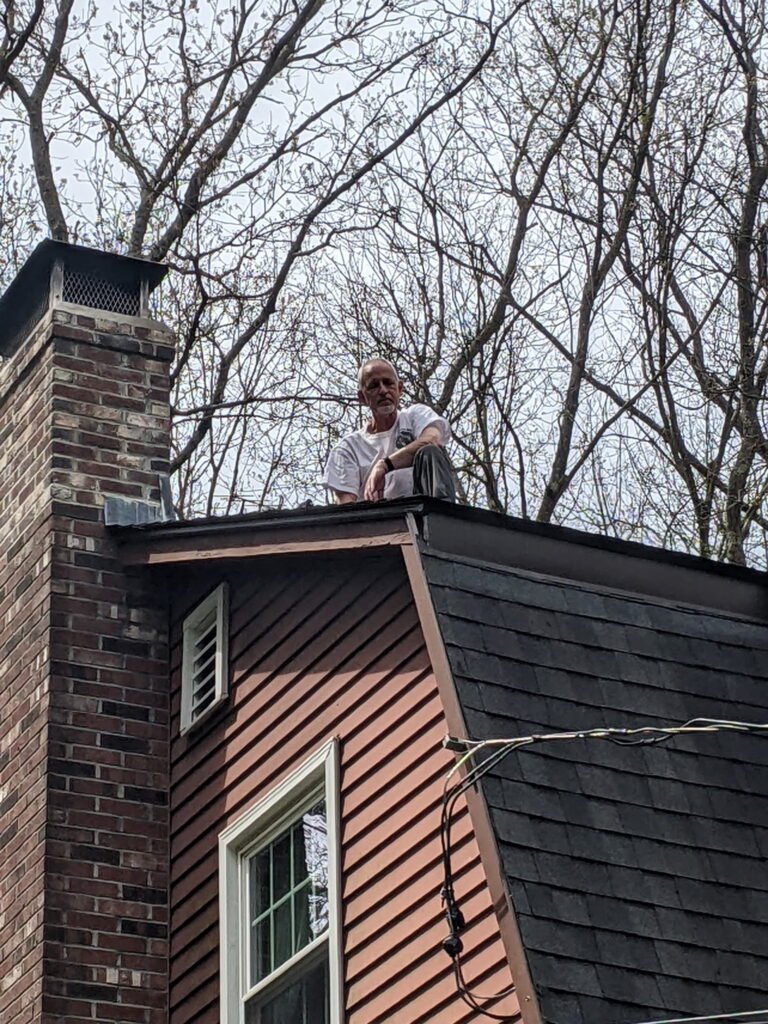
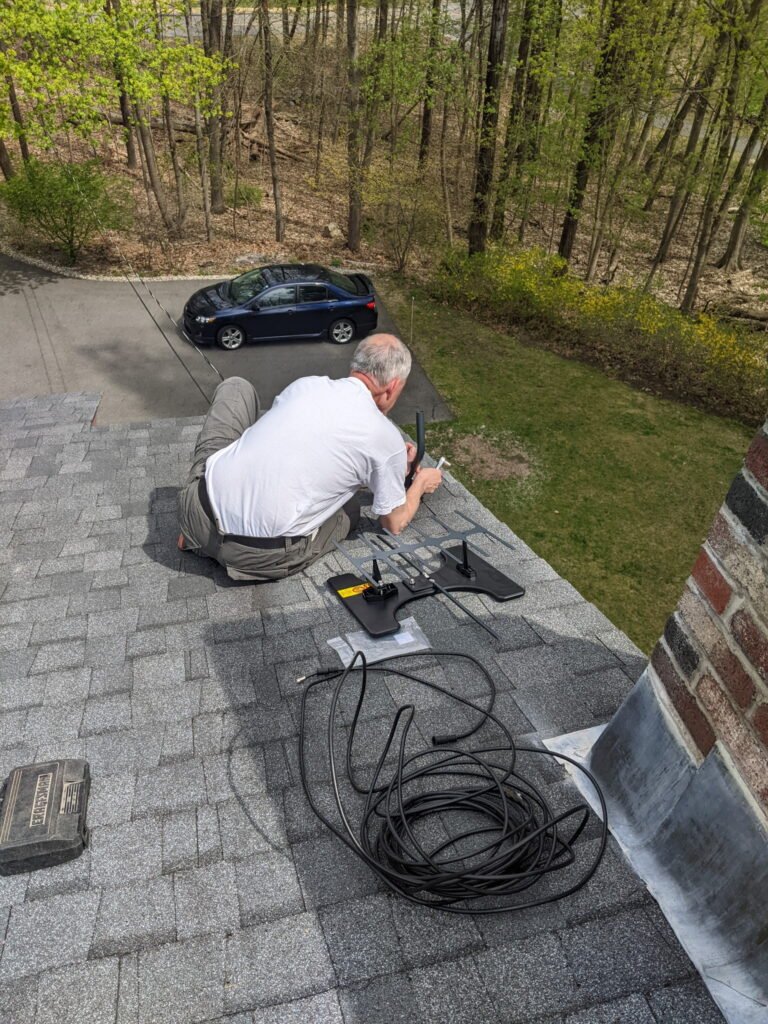
Note: This is a moment to pause for a bit of self-reflection.
Close your eyes. Please take a deep breath and let it out. Now ask yourself, “Am I DIY enough for this?”
Your antenna installation’s ideal height and location may be beyond your capabilities.
Safety first: Working at heights, running cables through attic spaces, or installations near power lines can be dangerous.
If you have any doubts, find a local professional to help with your antenna installation.
“This post may contain affiliate links. If you click one of them, we may receive a cute commission at no extra cost to you. Thank you.”
Are You Ready to Reap the Wind?
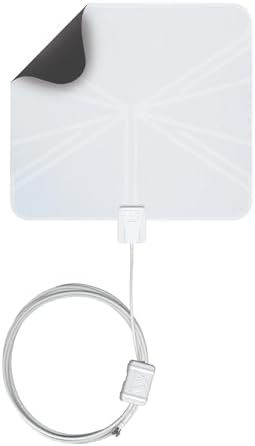
Indoor Antennas
If your fortunate enough to live near enough to receive your local broadcast stations with an internal antenna, it makes the installation simple.


Outdoor Antennas
Here are some highly rated external mounted antennas that will allow you to discover what channels are available in your area.

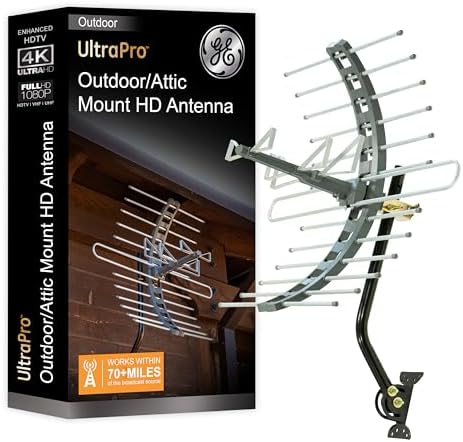
360 Rotating Antennas
If the broadcast locations in your area are on different azimuths a rotating antenna will help tune in these channels.


Our Curation Journey
This was our family’s first step in constructing our curated buffet. We were able to receive more than 72 local broadcast channels in our market.
We then went looking for more free content we could get from the end of that cord.
Next week: We will explore
The Fine Art of Tubing: You can find anything on YouTube…
TODAY’S QUESTIONS:
How many broadcast channels can you reap for free content?
What challenges did you have trying to identify your antenna install location?
Please share in the comments.

This article contains excerpts from
The Cord Curator’s Guide to the Galaxy
eBook Now Available
Paperback Now Available
Join Us
Become a guild member and join the curation revolution
Leave a Reply