
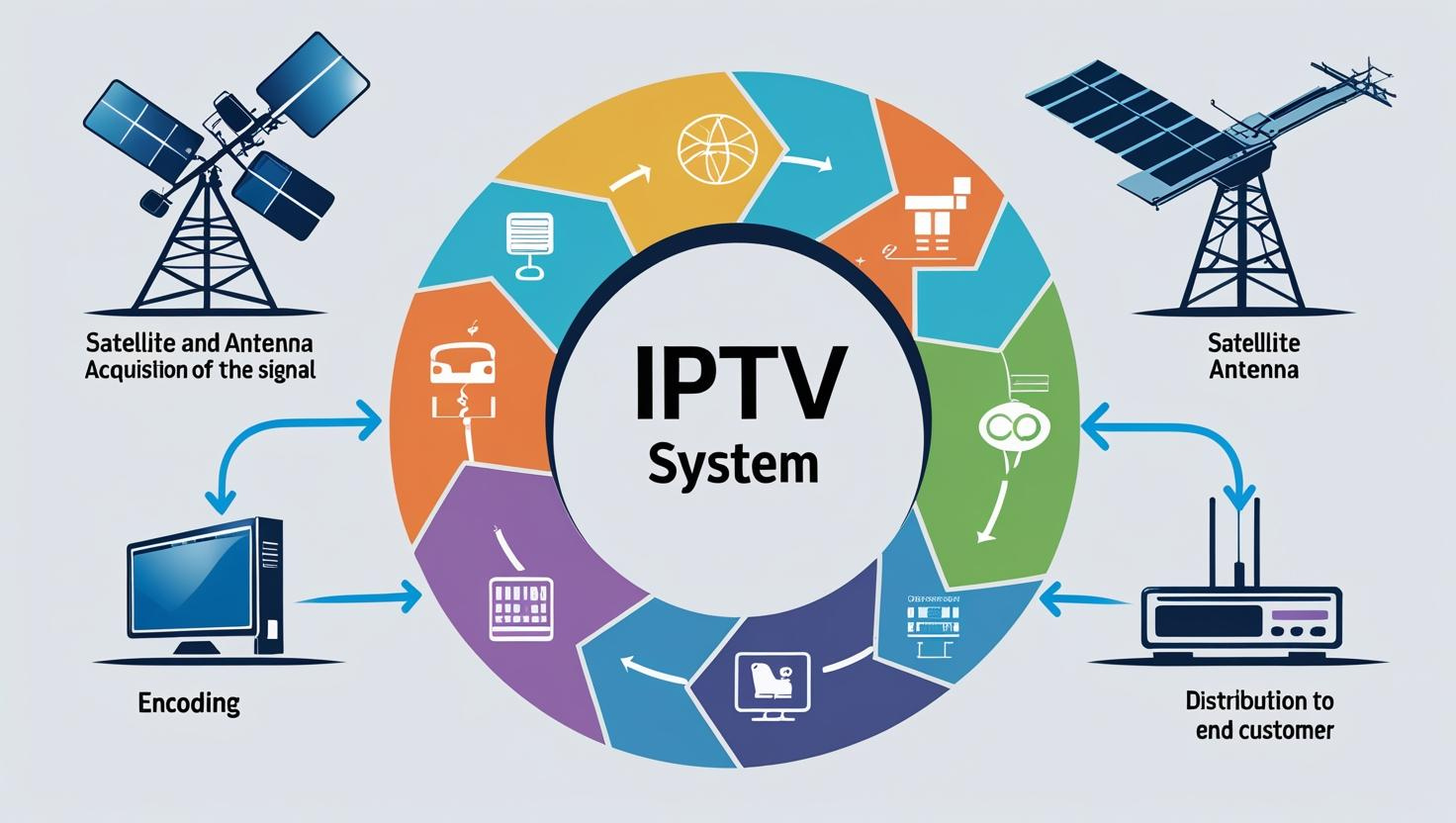
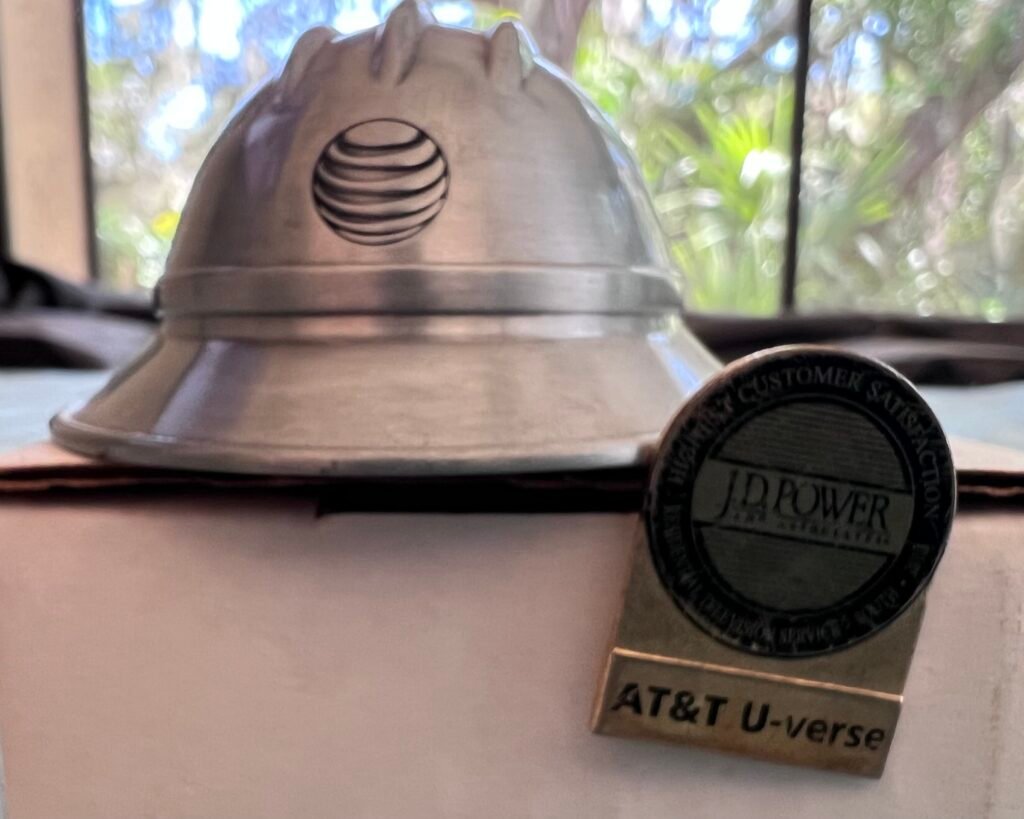
In 2006, the newly branded AT&T launched U-verse T.V. as part of its triple-play package, including broadband internet and IP Phone (VOIP).
The first market launch was in San Antonio, Texas, in June 2006, but AT&T had an aggressive expansion campaign throughout its twenty-two-state franchise.
After successfully lobbying each state government to adopt state-wide franchises and abandoning the local control of franchise licensing, it cleared the way for AT&T.
The Artist formerly known as VFSE.
The Video Field Support Engineer Team (VFSE) were a team of six and assisted with the build-out and test and turn-up of the regional Video Hub Offices (VHO). We also developed the VHO Core Competencies lesson plan and trained the Site Managers and Technicians who supported the VHO.
The VFSE helped to expand the U-verse T.V. service to seventy-four cities across the AT&T franchise states for five years. It was a monumental amount of travel, with six weeks on-site, hands-on training before each market launch; there were some years the VFSE team traveled over thirty weeks.
U-verse TV was not the only notable launch for AT&T in 2007; it was also the year Apple introduced the first iPhone with an exclusive deal with AT&T. The iPhone’s explosive adoption and the demands for data it placed on the AT&T mobility networks led to some interesting conversations in my travels that year.
Whenever I traveled with my buddy Danny, who often wore AT&T branded shirts when we would wait at the airport lounge or restaurant on our way home on Fridays and Danny would wear a shirt with just AT&T name and logo on it, the server or bartender would often lament about the poor data download speeds they experience with their iPhones, but when Danny wore a branded shirt that had AT&T U-verse on it the same server and bartender would lament that they couldn’t get our service yet.
“My neighbor across the street has it, so why can’t I?
The MPEG-4 Disruption Creates Competition
In many of the markets where U-verse launched, it was the only local competition to Cable’s monopoly and welcomed by customers who were weary of the poor service and ever-rising prices.
By 2009, AT&T U-verse had 4.3 million customers, a far faster adoption rate than Verizon could overbuild their fiber footprint. During this time, AT&T was living the combined bill dream.
U-verse’s triple-play made copper relevant for another decade and helped to maintain that residential connection.
The VFSE team helped build a world-class field operations team, and I worked with over three hundred exceptional individuals whose dedication and support helped AT&T wade through the troubling surf that lay in its future.
The next wave in the MPEG-4 disruption would prove the most trying, and an entire industry would feel it crash over them.
Netflix began to stream…
A Brief History of MPEG-4
MPEG (Moving Picture Experts Group) is an ISO/IEC working group formed in 1988 to create international standards for compressed digital audio and video

- MPEG-1 (1993) → gave us Video CD and MP3.
- MPEG-2 (1995) → became the dominant format for DVDs and digital TV broadcasting.
- MPEG-4 development: In the mid-1990s, it targeted better compression, interactivity, and flexibility for the internet, mobile, and broadcast.
- Breakthrough compression: MPEG-4 Part 10 / AVC (Advanced Video Coding), standardized as H.264 in 2003, offered about 2× the compression efficiency of MPEG-2 at the same quality.
MPEG-4 AVC: The Great Cable Industry Disruptor
- Lowered bandwidth requirements: Allowed watchable video at ~1–3 Mbps, making it viable over home broadband and even early mobile networks.
- By the late 2000s, all major devices (smartphones, game consoles, PCs, smart TVs) adopted H.264 decoding in hardware.
- Enabled on-demand libraries: Netflix’s 2007 streaming launch depended on MPEG-4 AVC to deliver movies over then-slow internet speeds.
- Streaming Services expansion accelerates. Hulu and later Disney+, Apple TV+, and HBO Max could deliver studio-quality video globally without building their own satellite or cable infrastructure.
- The “Streaming Wars” begin: With these Over-the-Top services delivered through the open internet, the competition shifted from distribution to content — and the floodgates opened.
When Netflix’s streaming services first launched very few consumers’ television sets could decode the MPEG-4 signal and consumers often needed new set-top boxes compatible with MPEG-4 AVC.
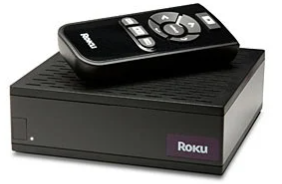
By 2007, Netflix had launched its Watch Instantly streaming feature, but it was PC-only. Most people still watched TV on… TVs — so Netflix needed a living-room device.. .
The first Roku in 2008 was born from Netflix’s internal hardware project. By moving streaming from computers to TVs cheaply and conveniently, it increased Netflix adoption and created an open platform that made it easier for competitors like Hulu, Amazon, and Disney+ to enter the market.
This was our first Roku set-top-box and we soon abandoned our Netflix DVD by mail subscription and started streaming the growing library of movies and television series we could now watch commercial-free.
In these early days, the legacy cable and studio content producers realized an increase in revenue through licensing their libraries to Netflix. A new generation discovered old popular programs, long off the air, but now enjoyed by the fast growing streamers.
Netflix also helped grow the audience for cable programs like AMC’s “Breaking Bad” and “The Walking Dead Franchise” into water-cooler megahits. We discovered both these programs when they started streaming the previous seasons without commercials, now we didn’t need to fast forward on the DVR anymore, we just had to wait until the next season became available.
But as Netflix’s audience grew it dramatically impacted cable televisions market share and the term “cord-cutting” became the popular way to describe the growing number of consumers fleeing the rising costs of their Cable-TV subscriptions.
Not So Smart TV?
Our first Roku set-top box provided years of streaming bliss on our old TV, which lacked the ability to access the growing number of streaming applications.
Even after we upgraded to our first 4K LCD TV, it still did not provide access to some of our favorite streaming apps. So, we upgraded our Roku to the new 4K version, but I was immediately disappointed when the just-launched HBOmax streaming service was not available due to an argument between Roku and HBOmax over access to subscriber data.
At launch, the Apple TV App (on Apple TV hardware) did support HBOmax very quickly, if not immediately—making Apple TV one of the earliest living-room platforms to enable HBOmax streaming.
It was a costly investment; the Apple TV was much more expensive than the new 4K Roku device I just invested in, but we were already getting HBOmax for free through our cellphone plan. So, I bit the bullet and bought another streaming box. It did come with a free year of the new Apple TV+ streaming service.
The Apple TV device has incredible 4K image quality, and it worked well with all our favorite apps. The Apple TV and 4K Roku devices have been part of our system since 2020 and remain a critical part of our Home Entertainment System, even after upgrading to smarter TVs.
“This post may contain affiliate links. If you click one of them, we may receive a cute commission at no extra cost to you. Thank you.”
Need to Smarten up your TV?
When the streaming wars raged, our LCD HDTV 1080P TVs still looked amazing, and we were waiting for the price of the new 4K TVs to come down, but our old sets lacked the ability to access the increasing streaming applications. These streaming devices helped to accelerate the stampede of subscribers away from their legacy cable TV packages. No more rental fees for proprietary cable set-top boxes. (My Father paid rent on their two boxes for 25 years, and they lacked an HDMI output for the LCD TV he had for the last ten years.)
You purchase these devices, connect them to your WIFI and set them in any room with a TV.

- Stream TV/Movies over Wi-Fi (Or Ethernet for the 128GB)
- Powered by the A15 Bionic Chip
- 128GB or 64GB of Built-In Storage
We’ve enjoyed our Apple TV 4K for five years now and it’s image quality still looks great on our upgraded 4K TV. It works great for the HD-Homerun app and slips through commercials well. Apple TV+ has nice selection of well made series and movies and remains a part of our rotation today.
I would make the invest again if our current box ages out or eventually failed.
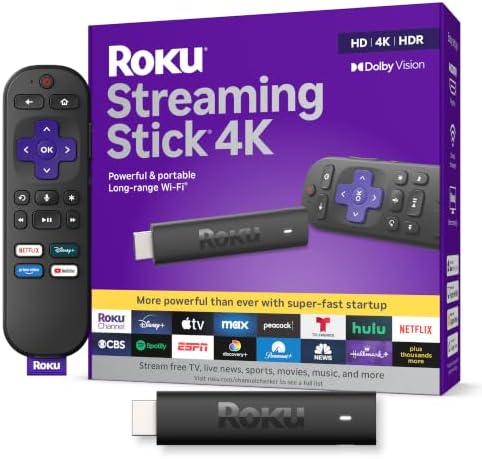
- Stunning 4K and Dolby Vision streaming made simple: With America’s number 1 TV streaming platform,* exploring popular ap…
- Breathtaking picture quality: Stunningly sharp 4K picture brings out rich detail in your entertainment with four times t…
- Seamless streaming for any room: With Roku Streaming Stick 4K, watch your favorite entertainment on any TV in the house,…
We’ve enjoyed several generations of the Roku streaming device since the 1st generation launched. When we finally upgraded to a 4K TV we purchased the 4K Roku device and it remains a part of our inventory today.
The Roku Channel now offers live TV, movies, TV series, kids’ content, and premium add-ons, accessible on Roku devices, mobile, and web.

- Advanced 4K streaming – Elevate your entertainment with the next generation of our best-selling 4K stick, with improved …
- The newest Fire TV experience (2026) – Our biggest update to Fire TV has a new, modern design that gets you to your ente…
- Cloud gaming, no console required – Stream Call of Duty: Black Ops 7, Hogwarts Legacy, Outer Worlds 2, Ninja Gaiden 4, a…
We don’t have any experience with the fire stick, but some of our friends and family have used this as part of their curation transition.

- The Google TV Streamer (4K) delivers your favorite entertainment quickly, easily, and personalized to you[1,2]
- HDMI 2.1 cable required (sold separately)
- See movies and TV shows from all your services right from your home screen[2]; and find new things to watch with tailore…
One of our first streaming devices was the 1st generation Chromecast stick in 2013. It allowed streaming (“casting”) of video, music, and other content from a phone, tablet, or computer to a TV. It had limited processing power and memory, making it harder to run newer streaming protocols and apps efficiently.
The new model supports all the streaming services, but also supports with the Smart Home Control devices to automate your home.
These streaming devices will help make your older TV sets relevant until you can afford or need to upgrade.
For a detailed review of these devices see this from LON.TV
LON.TV was an important resource for us as we began our curation journey and I recommend all Guildmembers subscribe to his YouTube channel.
Are you ready to upgrade your TV set?
If your ready to upgrade or need to replace your failing old TV set. The new sets come with a host of new features and most models include access to branded free-ad supported streaming channels without a subscription.
Here are some highly rated TVs for every budget need.
Budget Friendly TVs


Mid-Priced TVs


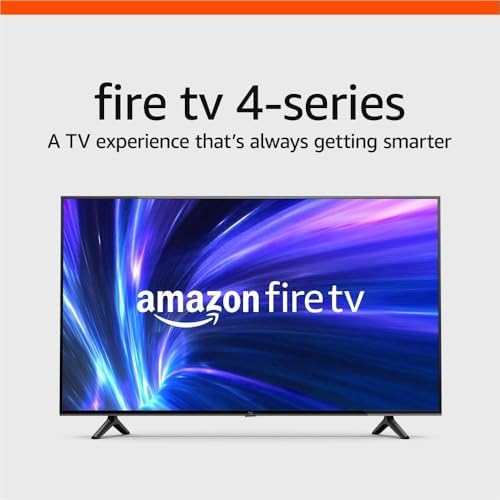
High-end Top Sellers


Wherever you are In the curation of your home entertainment system, I hope this provides you with useful information that will help you meet your goals and ensure your family continues to enjoy this galaxy of amazing content without busting your budget.
Next week: We will explore- How we escaped the subscription maelstrom and began our curation journey.
TODAY’S QUESTION:
How many streaming services does your family subscribe to?
Are you happy with the streaming services you have?
Please share in the comments.
Become a Guildmember

This article contains excerpts from
Leave a Reply